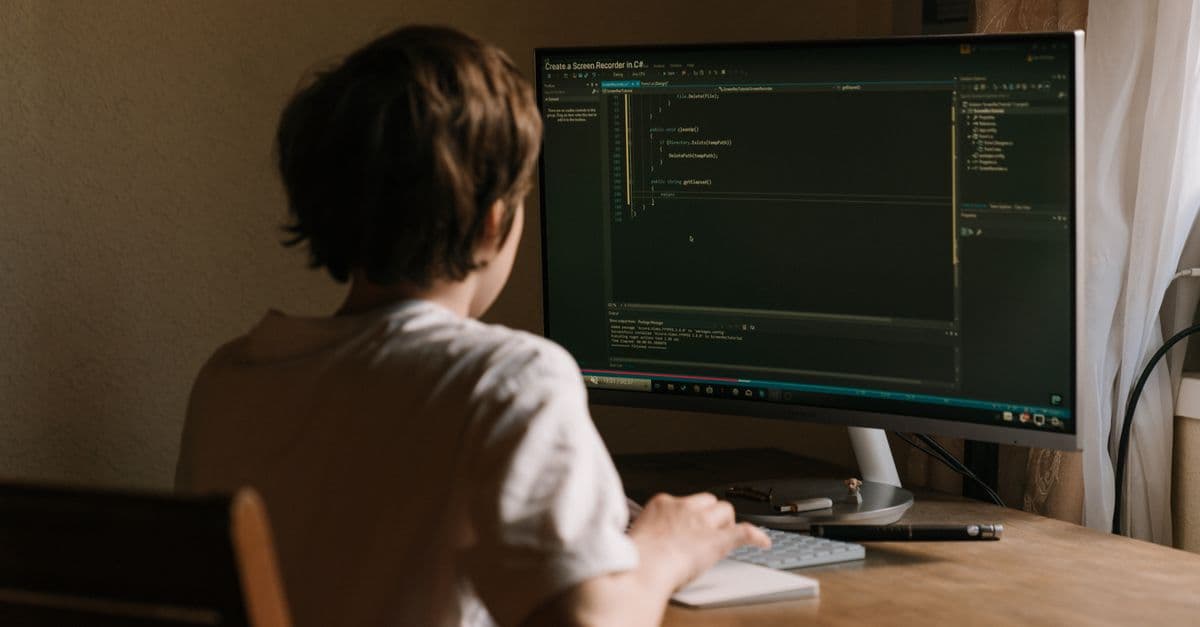
Coding for teenagers is a different proposition from coding for young children, and treating it the same way is a common mistake. A nine-year-old learns to code through colorful, playful first steps. A fifteen-year-old can build something genuinely impressive, think about university and careers, and go deep into advanced areas that were out of reach a few years earlier. The teenage years are, in many ways, the most exciting and highest-stakes window for learning to code.
If you are the parent of a teen, whether they are a complete beginner or have been tinkering for years, here is what you actually need to know: what teens should learn, why these years matter so much, how coding connects to their future, and how to support them without becoming the nagging parent they tune out.
Is it too late for a teen to start coding?
Let me address the worry I hear most from parents of teens who have never coded: have they missed the boat? The answer is a clear no. Teenagers have real advantages that young children do not. They can read and type fluently, they have the patience to sit with a hard problem, and they have the abstract reasoning to handle complex ideas that would lose a younger child.
This means a teen can often progress faster than a child precisely because they are not held back by the basics. A motivated fifteen-year-old beginner can pick up a real language like Python and be building meaningful projects within weeks. So if your teen is curious but has never started, the door is wide open. The best time to begin is simply whenever they are willing.
What should teens actually learn?
For teenagers, it is usually time to move past the introductory block-based tools and into real, text-based programming, because teens generally find blocks a bit beneath them and are ready for the real thing.
A great starting language for most teens is Python, thanks to its readability and its power. From there, the right direction depends entirely on what your teen is drawn to, and teens are old enough to specialize around genuine interests rather than just dabble.
A teen interested in artificial intelligence can begin real machine learning, learning how the systems behind chatbots and recommendation engines actually work, using the same Python tools professionals use. A teen drawn to building things people use can learn web development with HTML, CSS, and JavaScript, or app development. A teen who loves games can go deep into game development. A teen who enjoys logic and problem-solving might get into competitive programming and algorithms.
The shift at this age is from "learning to code in general" to "building real things in an area I care about." That sense of direction is what keeps teen coders motivated, and it is what produces work worth being proud of.
Why do these years matter so much?
The teenage years are a sweet spot for a few reasons that compound on each other.
The thinking skills coding builds, breaking down problems, reasoning logically, debugging, persisting through failure, land especially well now, because teens are developing exactly these capacities and coding gives them a concrete, rewarding way to strengthen them. These are the same skills that help with everything from school to future work, so the benefit reaches far beyond programming itself.
There is also the practical reality of timing. The projects a teen builds, the skills they develop, and the interests they discover now can directly shape their university applications and early career options. A teen who spends these years building real things is not just learning to code, they are quietly assembling evidence of who they are and what they can do, which matters enormously when it is time to apply for things.
How does coding help with university and careers?
This is where a teen's coding genuinely converts into opportunity, and it is worth being clear-eyed about how.
For university, a teen with real coding projects has something concrete and impressive to point to. Applications increasingly favour students who have built things, pursued genuine interests, and demonstrated initiative beyond their grades. A teen who can say "I built this app" or "I trained this model" or "I made this website that people use" stands out in a way that test scores alone do not. And of course, coding skills are directly relevant for any technology-related degree, giving a head start to those who arrive already fluent.
For careers, the picture is broader than most people assume. Yes, coding skills lead toward software and technology roles. But the deeper value is that almost every field now runs on data and software, from medicine to finance to design to science to business. A young person who can work with both has a meaningful edge regardless of the specific path they choose. And in a world increasingly shaped by AI, understanding how these systems work, rather than just consuming them, is becoming a foundational advantage in nearly any career.
The honest framing is this: coding does not lock a teen into being a programmer. It expands their options, in directions they cannot fully predict yet.
What motivates teen coders, and what does not?
Teenagers are motivated differently from younger kids, and understanding this is key to supporting them.
Teens are driven by autonomy and by building real things that matter to them. They want to make something genuine, an actual app, a real website, a working model, not toy exercises that feel like busywork. They respond to projects connected to their own interests and to the freedom to pursue their own ideas. A teen building something they chose will pour hours into it; a teen handed pointless drills will disengage fast.
What does not work is the same thing that does not work at any age, but it backfires harder with teens: pressure, nagging, and framing it as something you are making them do for their own good. Teens are exquisitely sensitive to being controlled. The more you push coding as an obligation, the more they will resist it. The goal is to support genuine interest, not to manufacture compliance.
How do you support your teen without nagging?
The most useful thing you can do is provide opportunity and encouragement while leaving the autonomy with them. Take their interest seriously and treat their projects as the real, impressive things they are. Be genuinely interested in what they build and ask them about it, since teens, despite appearances, do want their efforts seen and respected.
Resist two opposite temptations: micromanaging their learning, which they will resent, and dismissing it as a hobby, which deflates them. Instead, give them access to good learning, the room to direct it, and your steady belief that what they are doing matters.
You should also know that teens hit real walls in advanced topics, AI, complex projects, harder languages, and a teen stuck alone on something genuinely difficult can lose momentum or conclude they have hit their ceiling, when really they just needed guidance past a hard point. Access to someone who can teach them the next level, and unstick them when they are stuck, is often what separates a teen who plateaus from one who keeps growing.
That is exactly what we provide at MindLeap Academy. Our live online classes are built for serious young learners, including teens aged up to 18, taking them into real languages and advanced areas like AI with a real instructor guiding them rather than a video they watch alone. If your teen is ready to build things that genuinely matter, for their own satisfaction and for their future, you can book a free trial class and let them experience what learning at the next level feels like.
See your child light up with code
Book a free 1-on-1 trial class with an expert mentor. No credit card, no commitment.
Book a Free Trial Class